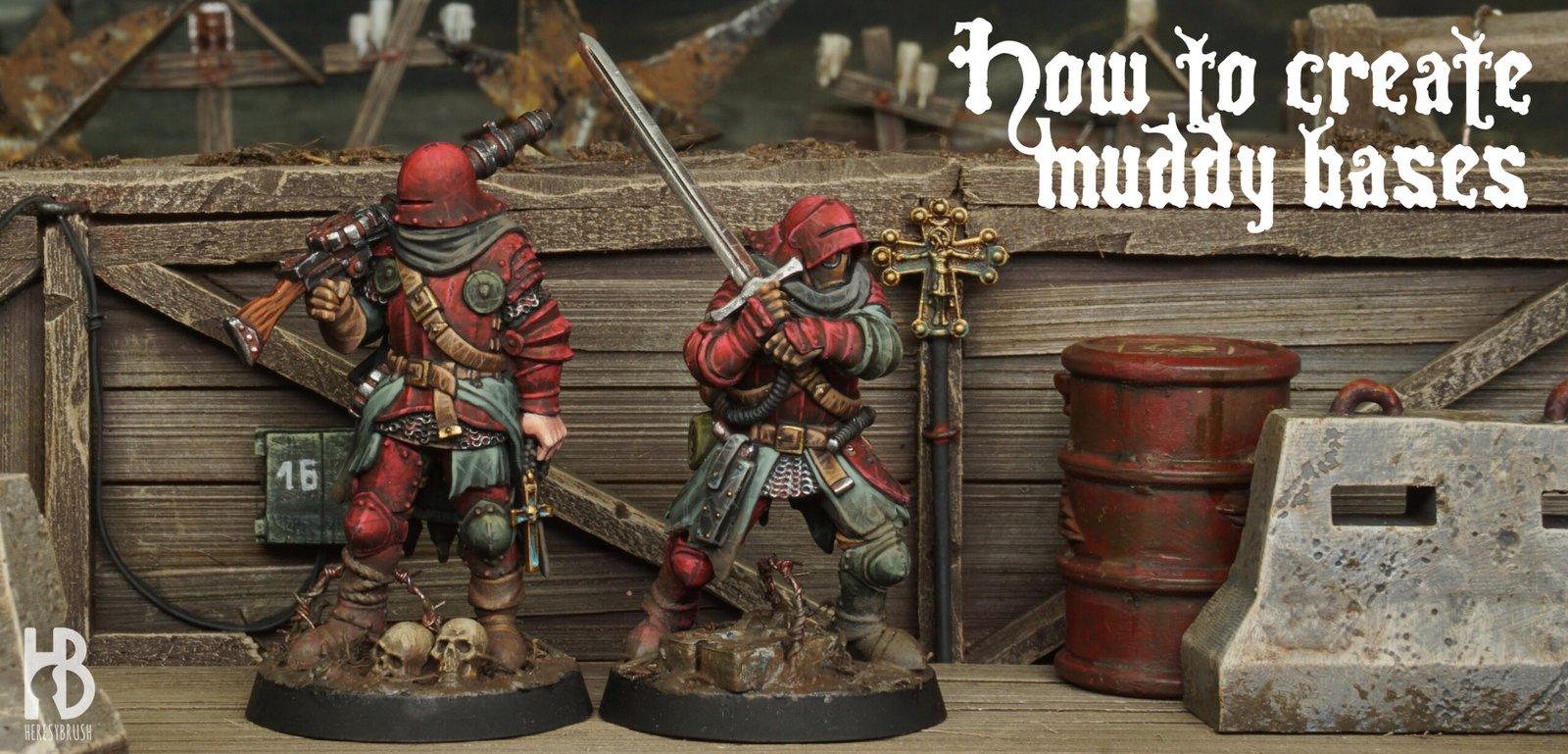
Mud is almost inseparable from the imagery of Trench Crusade, but convincing muddy ground does not need to be complicated. In this tutorial, I show how I build a wet, churned-up battlefield base using a relatively simple combination of textures, natural elements and enamels. The goal is to create something suitably grim and filthy while remaining practical enough to reproduce across an entire warband. I hope you enjoy the tutorial and perhaps find a few ideas you can use to bring some extra mud and misery to your own miniatures! Full tutorial published on the official Trench Crusade website: Trench…
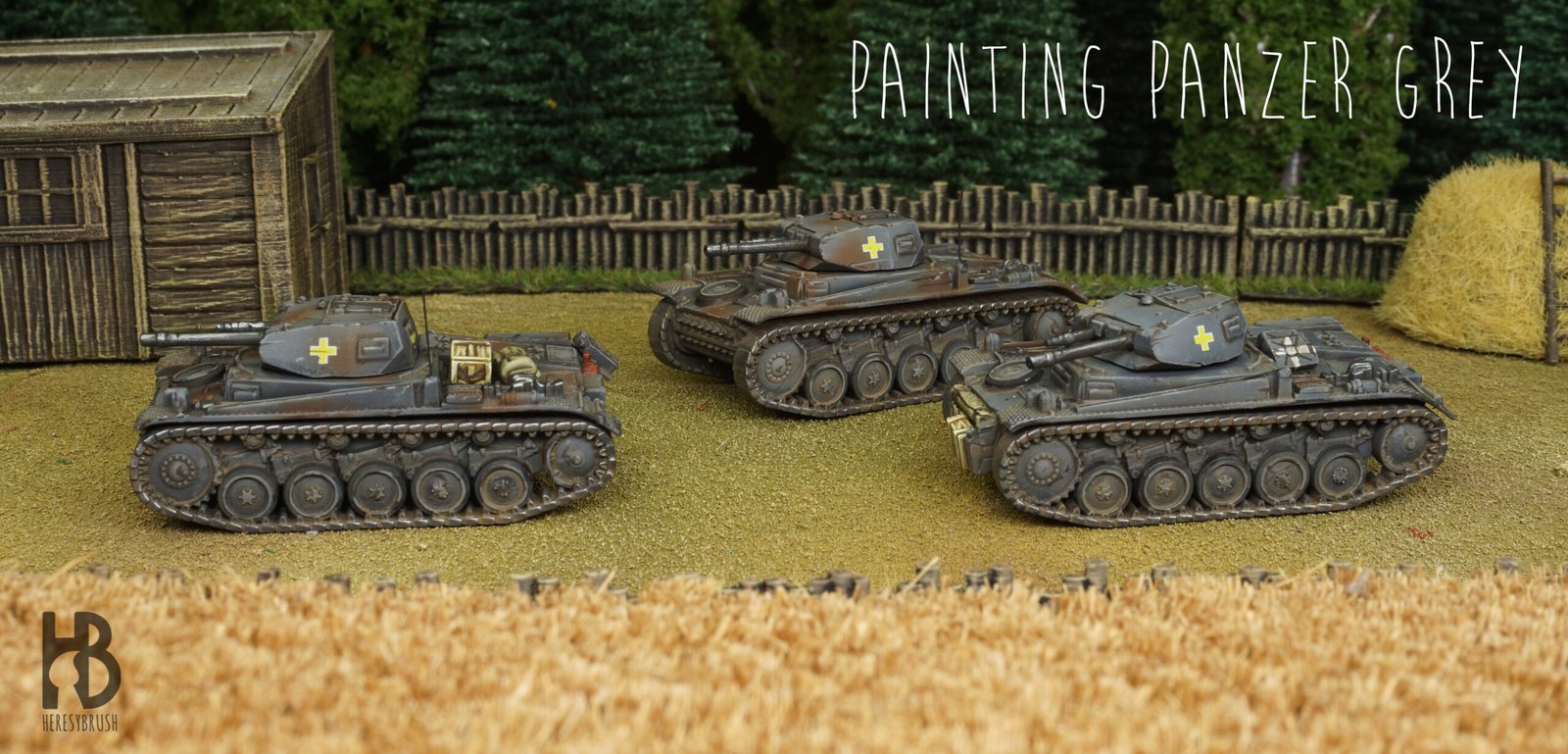
How to paint Panzer grey
In this tutorial we are going to explore a classic early war German scheme, the dark grey Dunkelgrau. We can also combine it with disruptive brown spots. This camouflage was very common during the early stages of the war, although the brown tone is often almost invisible in black and white photographs. We will follow a hybrid approach, combining acrylics with enamels and oils. The process includes controlled highlights with the airbrush, drybrush refinement, and simple weathering effects to achieve an above average tabletop result. You can follow this guide step by step, or simply adopt the techniques that you…
How to paint WWII Japanese tanks using only a brush
This article was originally published on the Battlefront website. In previous tutorials, we explored different methods for painting camouflage on tanks using soft- or (this, for example) hard-edge patterns (this and this, for example), with or without masking. These techniques typically involved the use of an airbrush, a tool that can seem intimidating to many hobbyists. In reality, however, airbrushing is quite easy, and I highly recommend giving it a try if you have not already. The most critical aspect is cleaning the airbrush properly after each session, and always remember to thin your paints. That said, in this tutorial…
How to Paint Paper Panzers
In this article, we will explore how to create an anachronistic WWII camouflage, a “splinter camo”, commonly used by scale modelers for “what if” tanks and prototypes, such as the iconic German E series. To achieve this, we will use masking tapes to create an intricate tri-tone camouflage, where each color is carefully highlighted to create a striking contrast. This article was originally published on the Battlefront website, Part 1 and Part 2. The “What If” tanks open up endless possibilities for experimenting with color schemes and camouflage. Since these tanks never existed, the creative freedom is limitless. However, it…
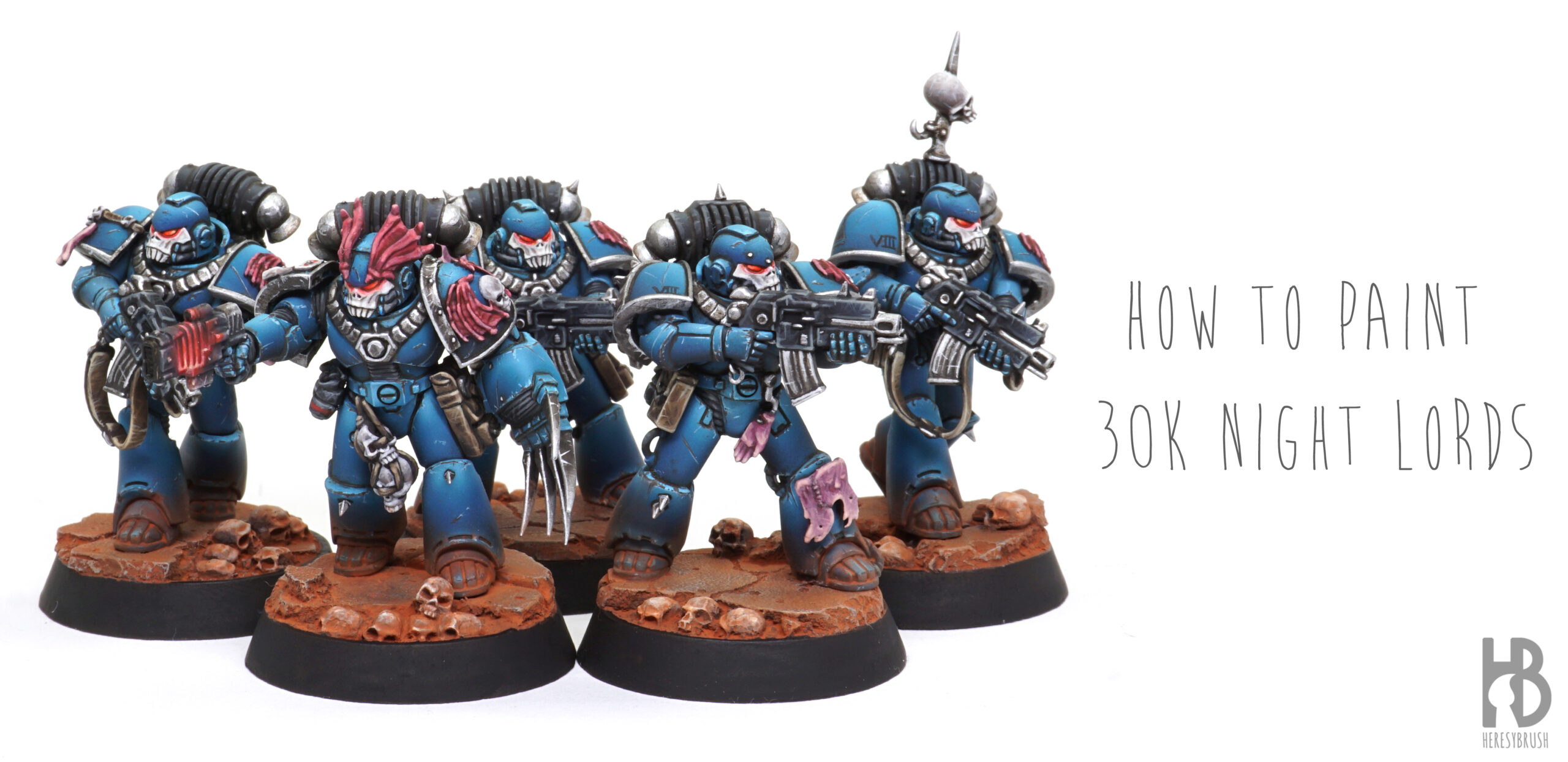
How to paint WH30K Night Lords
After several years of wanting to start painting a Horus Heresy Legion army, I finally had the chance to do it. I chose the Night Lords, a Legion that is perhaps a bit underrepresented compared to others but features a beautiful color scheme and rich lore. I finished painting the first squad and decided to write a tutorial using the last miniature. Instead of the official painting scheme, which is very dark blue often with lightning on the armor, I opted for a desaturated and slightly greenish blue inspired by some great painters such as @loyalistareboring and @Maybug_Games on Instagram.…
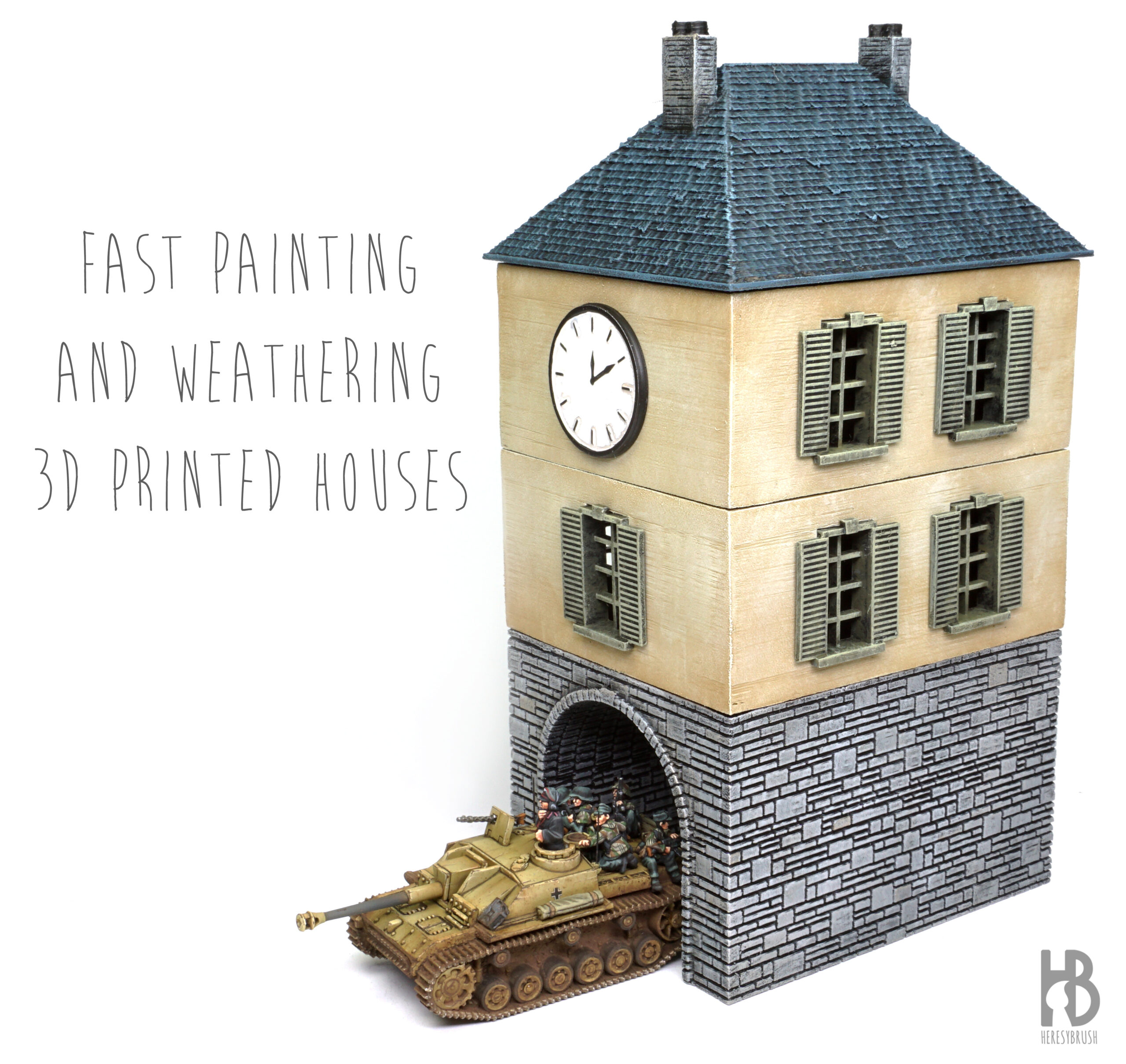
How to paint 3D-printed buildings
In this tutorial, we will explore fast and simple techniques for painting 3D-printed houses made from filament, perfect for wargaming. Although we are going to paint a 15mm house for Flames of War, the same techniques can be applied to any theme and scale. The idea is to take advantage of colored primer cans for the base colors, and then create contrast using dry brushing and filters. Step 1 – Preparation Filament printers are an amazing tool for creating scenery elements for wargames with ease. However, the inevitable downside of this type of printing is the resulting linear texture. To…
How to paint tanks using the drybrush and oils
In this tutorial, we will explore techniques for enhancing a basic paint job using oil paints. Unlike acrylics, oil paints require an organic solvent like White Spirit or turpentine (which is toxic, such as Enamel Odourless Thinner A.MIG-2019) instead of water; and take hours to dry, as opposed to mere seconds with acrylics. However, this extended drying time lends oils the advantage of effortless blending, allowing for the creation of multiple effects. For instance, we can employ this property to generate shadows, thereby enhancing the sense of volume, or to simulate various weathering effects such as dirt or dust accumulation.…
How to create mud effects on 1/100 tanks
This article was originally published on the Battlefront website, here. This article is a follow-up of Painting WWI German AV7 tank: the art of enamel washes. As demonstrated recently in another tutorial on painting Painting WWI French Fusiliers: How to create mud bases, the idea is to create mud effects rather than simply painting them. While wargamers often resort to the dry-brush technique using acrylics to simulate mud, the results, while interesting, may lack the texture typically associated with this particular effect. To address this, we can turn to specialized products designed to achieve hyper-realistic mud effects. These products not…
Painting the WWI German AV7 tank: the art of enamel washes
This tutorial was originally published on the Battlefront website, here. Acrylic paints are the most popular choice for wargamers, and in most cases, the only option on the painting bench. This preference is quite logical, as acrylic paints are readily available, non-toxic, quick-drying, and overall user-friendly. However, if we take a closer look at what Scale Modelers do, we will discover that they employ a variety of paint types, including acrylics, lacquers, oils, enamels, and powder pigments. The distinct features of each type of paint can be utilized to perform specific steps or achieve particular effects. Therefore, having a understanding…
How to create mud bases
This article was originally published on the Battlefront website: here. As wargamers, we frequently opt to paint bases rather than create them. While it is true that we usually incorporate some form of texture, often achieved by adhering sand with glue, the subsequent step typically involves multiple layers of drybrushing painting. However, for the sake of achieving more authentic bases and scenery, it is advisable to create the texture entirely instead of relying on painting. A notable example is mud; painting mud effects can be quite challenging, while creating realistic mud effects becomes remarkably straightforward when employing the right tools…